Monday, October 23, 2006


Title: Pervalism
Author: M.E Ellis
Publisher: Wild Child Publishing
Publisher's Address: P.O. Box 4897, Culver City, CA, 90231-4897
ISBN number: 1-934069-21-3.
Price: $15.99
Publisher phone number and/or website address: www.wildchildpublishing.com

Pervalism
By M.E Ellis
Review by Aaron Paul Lazar
Author of the LeGarde Mystery Series


Pervalism is a gripping journey into the tortured mind of serial killer John Brookes. Abused by an odious mother and adored by a doting father, Brookes’ psyche is scarred from childhood. His sins begin with animal torture, which gives him a weighty sense of power and a bizarre sensual release. Although the torture scenes were tough to read, the story beguiled this reader with ghoulish fascination and it was impossible not to read Pervalism in one sitting.

Pervalism is not for the faint of heart. Brookes’ vile behaviors escalate as he reaches his teen years. When his promiscuous mother bears a child, resultant from an affair, his jealousy erupts into obsessive rage. She appears to love the new baby. Yet Brookes is riddled with questions, ripped apart by the disparity. How could she have hated him so much, yet love the squalling baby who now rides in his old pram? His hostility and excessive envy push him to stalk her, and when opportunities ripen, he drives her to a ghastly deed.

Oddly enough, Brookes matures into a seemingly normal man who marries, has a child, and holds down a job as a hospital janitor. Yet, perhaps it isn’t really so strange, when one considers the current day killers who are unmasked and found to be living sedately in suburbia, reportedly considered “nice, quiet neighbors.” Brookes holds out for several years without giving into his baser needs. The devil quiets when he learns to love his wife and son with ferocity.

When Brookes’ family is treated poorly, a rumbling sense of outrage collides with old feelings of violence and revenge, and the grisly deeds of his earlier life are perpetuated.

As the body count rises, Ellis exhibits a unique talent in her ability to provoke understanding and empathy for her homicidal protagonist. Brookes’ pain is palpable. His fears understandable. His rage predictable. Each time he kills anew, however, the horror escalates to unpredictable levels.

M.E’s skill is consummate. Her voice, consistent and eerie, will ensnare the most reticent reader. An English setting, the backdrop for Brookes’ heinous acts, provides a rich tapestry of British culture that weaves depth and a strong sense of place into the work. John Brookes becomes eerily lifelike in this potent and unforgettable thriller. Watch the book trailer at
http://www.youtube.com/watch?v=0-eAbASGTVk and purchase either the ebook or print book at: http://www.wildchildpublishing.com/.

**********************************************************************

Aaron Paul Lazar resides in Upstate New York with his wife, three daughters, two grandsons, mother-in-law, dog, and four cats. After writing in the early morning hours, he works as an electrophotographic engineer at Kodak, in Rochester, New York. Additional passions include vegetable, fruit, and flower gardening; preparing large family feasts; photographing his family, gardens, and the breathtakingly beautiful Genesee Valley; cross-country skiing across the rolling hills; playing a distinctly amateur level of piano, and spending “time” with the French Impressionists whenever possible. Although he adored raising his three delightful daughters, Mr. Lazar finds grandfathering his “two little buddies” to be one of the finest experiences of his life.

Double Forté is the founding book of the LeGarde Mystery series and was released in January, 2005. Upstaged, the second, was released in October, 2005. His third, Tremolo: cry of the loon, was released via Twilight Times Books under the Paladin Timeless Imprint in fall, 2006. Mr. Lazar is currently working on his eleventh book, Lady Blues. He is a regular columnist for FMAM (Futures Mystery Anthology Magazine) and The Back Room, A Cozy Retreat for Writers and Readers. Contact him at:
http://us.f387.mail.yahoo.com/ym/Compose?To=Aaron.Lazar@yahoo.com or via his website at http://www.legardemysteries.com/

Thursday, October 12, 2006


In the Mood for Haiku?


(See contributions from friends at the end of this post.)


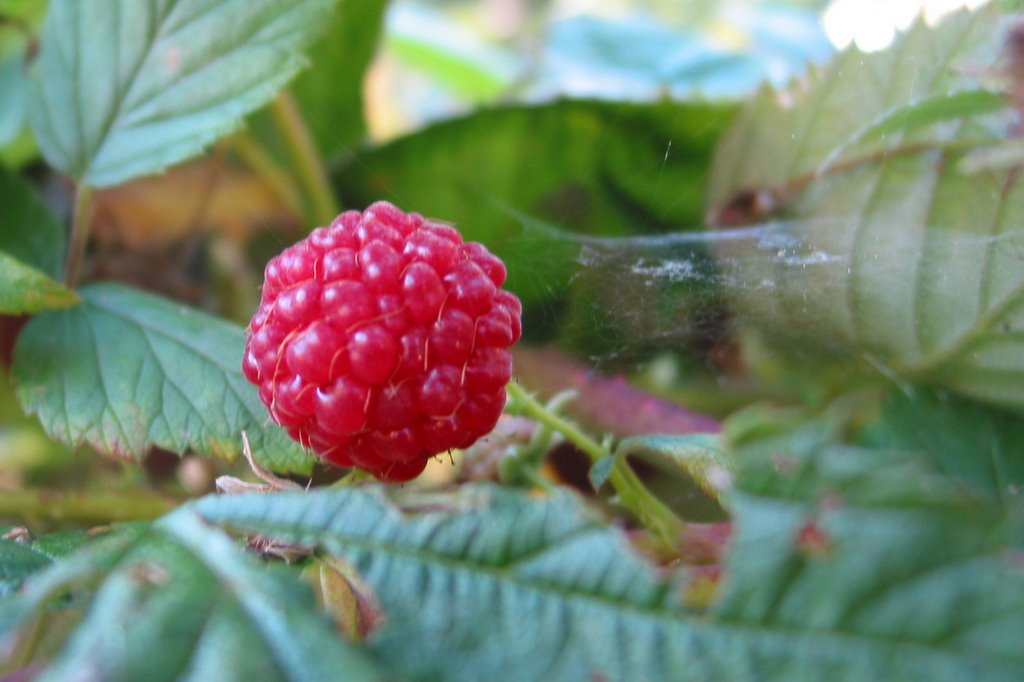
Red berries

Cold with morning dew

Quench my thirst


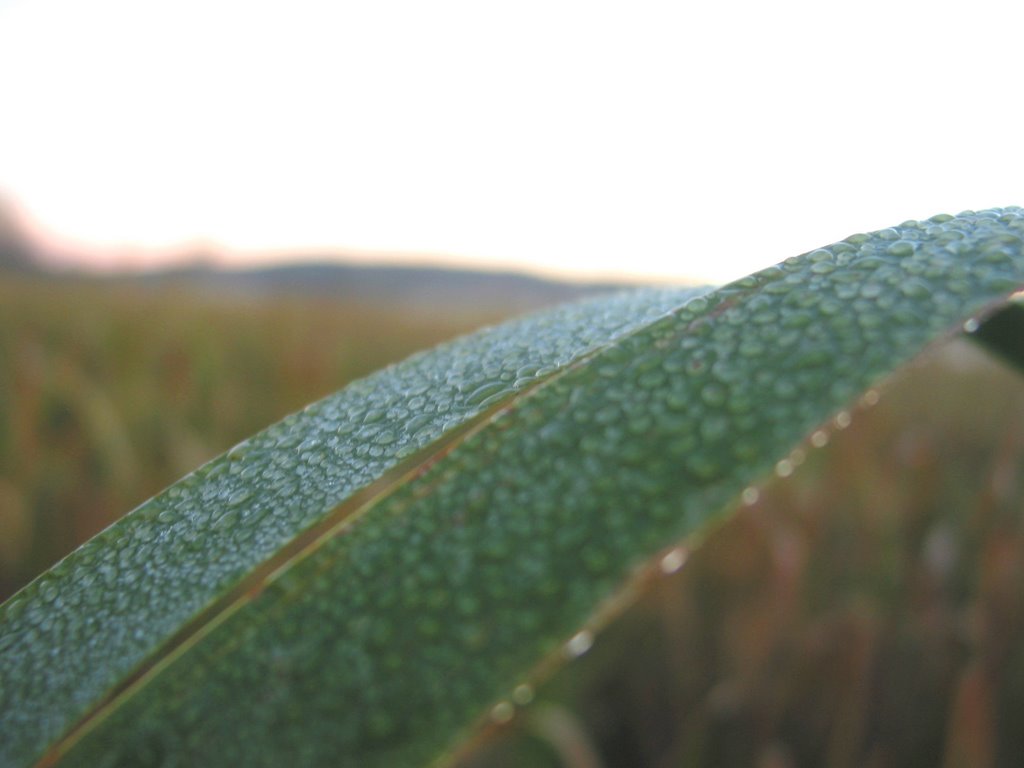
This morning, while waiting for hours at the doctor's office, I read more from Wabi Sabi for Writers by Richard Powell. This book speaks to my writer's soul. Its inspiration is pure and true. As I stared outside the window at a holly bush, hanging heavy with red berries, the above Haiku came to mind.


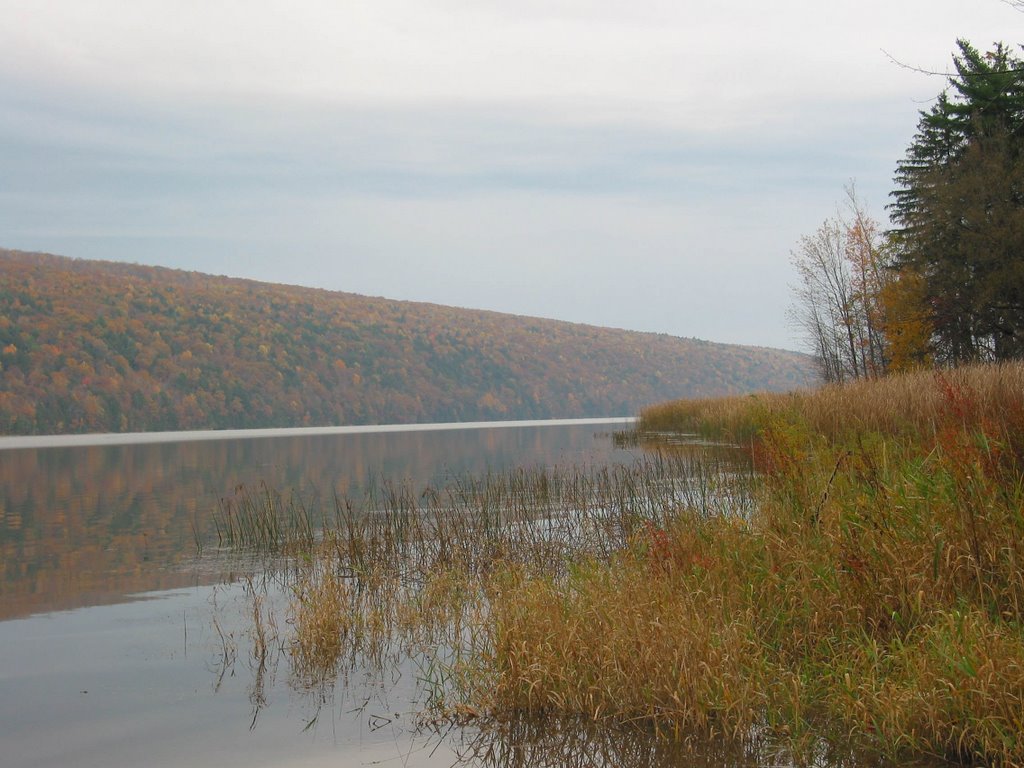
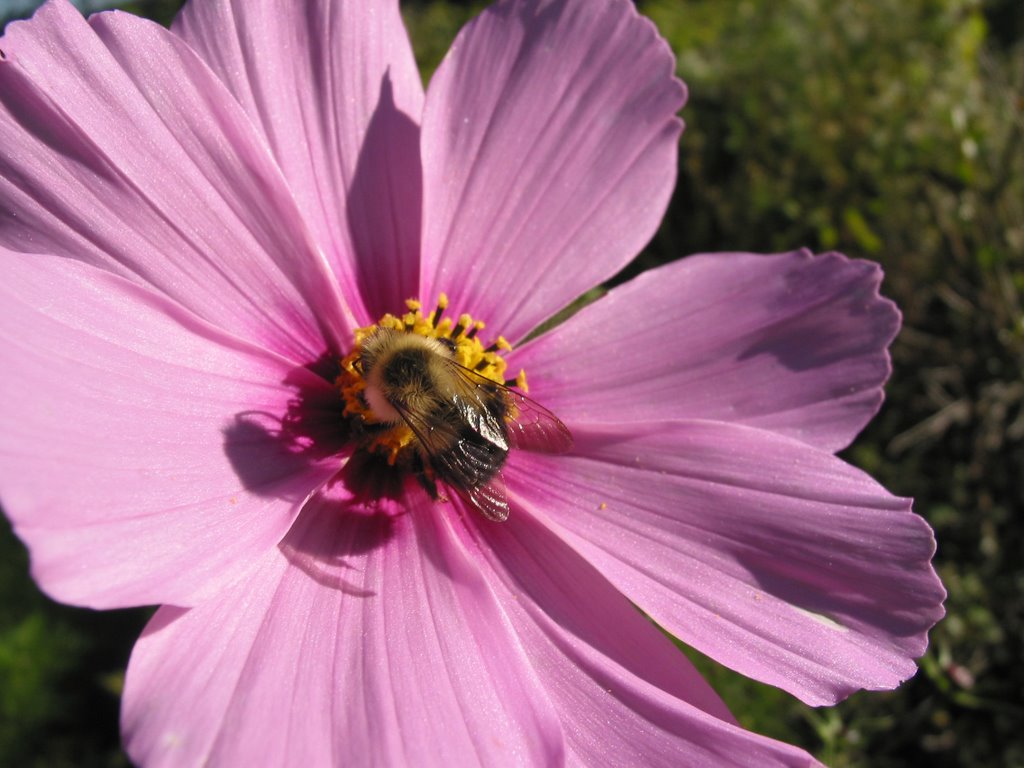
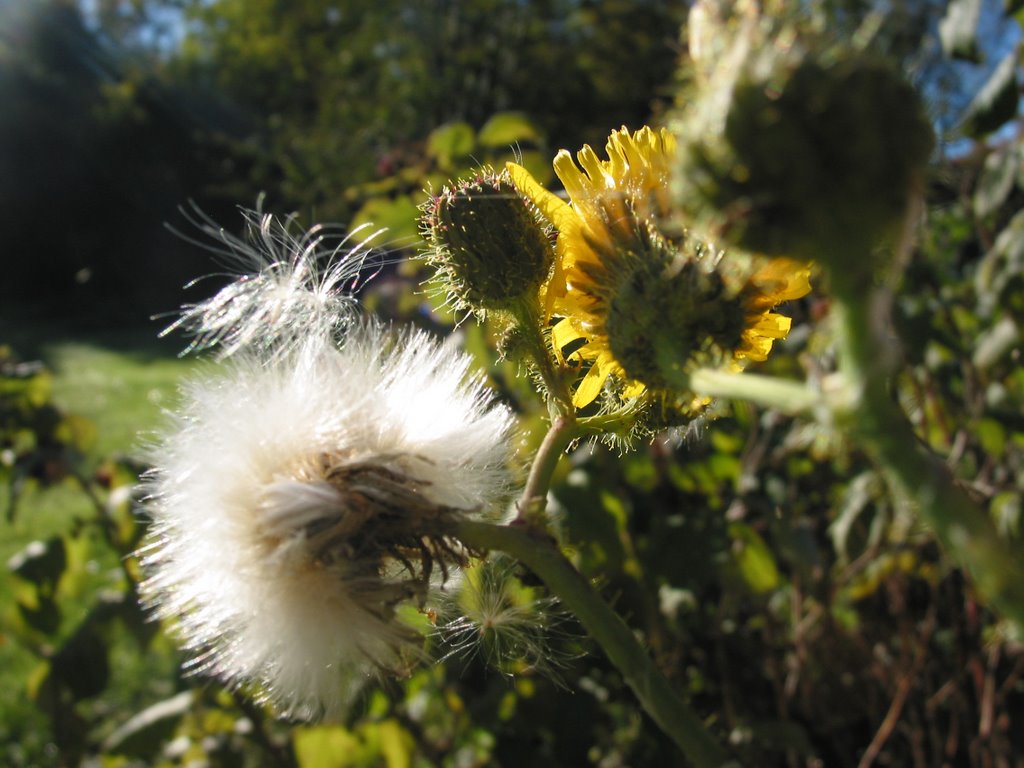
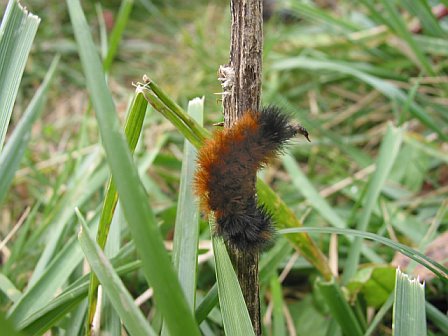
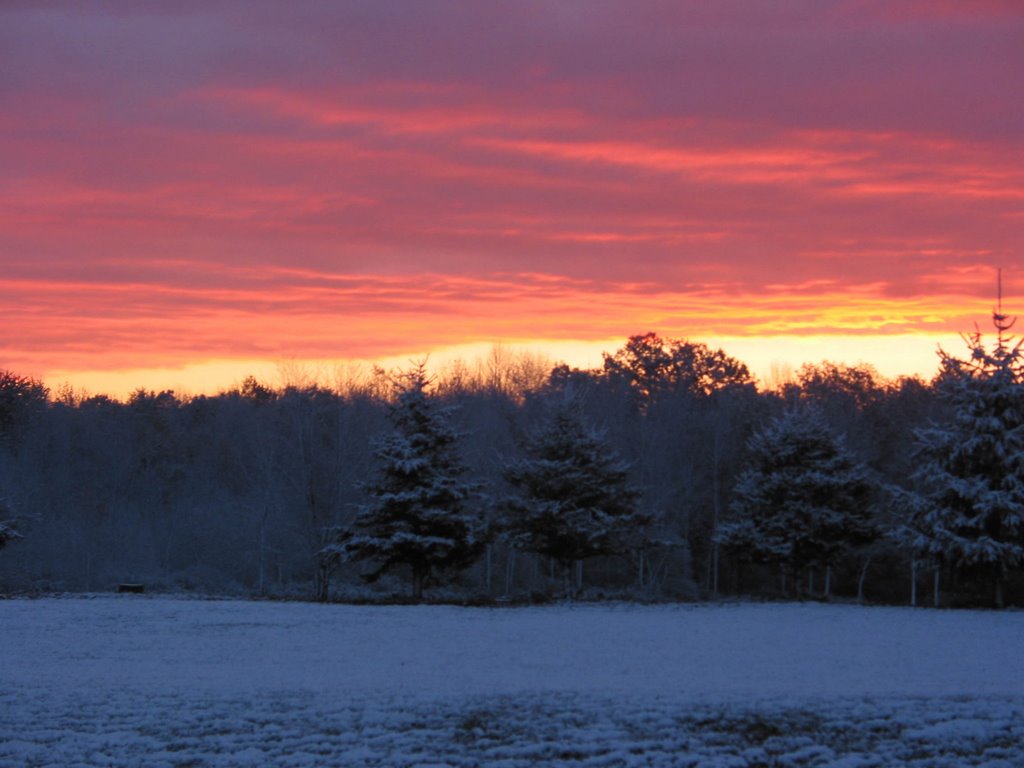
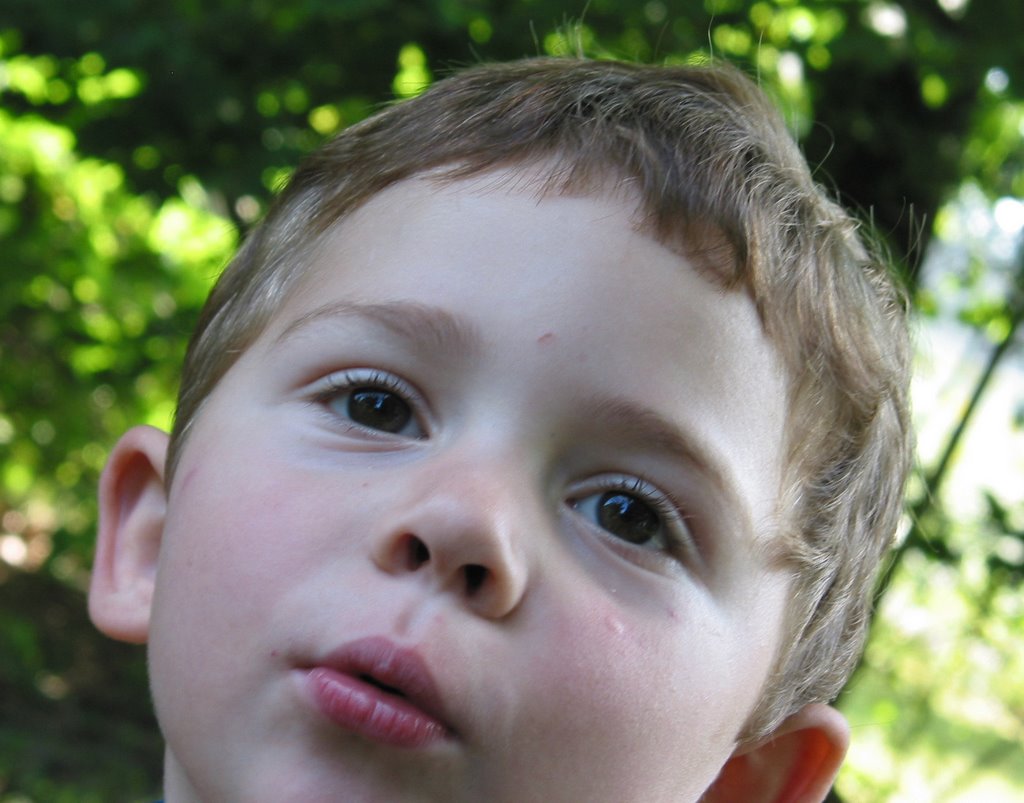
The above images were snapped during the past week. Do they inspire your writer's soul?

If Haiku is your thing, try your hand at it.

Remember, it's either of the following formats (in syllables):

three
five
three

or

five
seven
five

Post your Haiku here, and also send them to SW Vaughn, who will post them on her Haiku site and marry them with one of these images or another of her own choosing.

********************************************

From Kim Milgate:


Granddaughter

Lovely wide-eyed lamb
Clean clear soul


From Allison Lazar:


Agony stricken
Finally time to dispose
of all that is bad


From Jude Hardin:

Fuzzy orange worm
Climbs a stairway to nowhere
Dreaming of white wings


From Jeanne Fielding:


Fearsome Haiku land
Faint of heart be wary now
Nature's featured here


From Lesia Valentine:

Sweet kitten

lithe bundle of fur
has sharp claws


Sweet kitten

curious and brave
eats orange worms


Book Trailers If you enjoyed the movie below, wait 'til you see the ones created by Lesia Valentine adn S.W. Vaughn (aka Sonja Baines). These two great writers inspired me to try my hand at it. Please check out their trailers at:

Rain Coming, by Lesia Valentine


Soul Haven by Sonja Baines


Let me know what you think, and be sure to post on their blogs to give them feedback!

Friday, October 06, 2006

Okay, this is the third version of the trailer. I hope this is the final one, I need to start on trailers for individual books!


Saturday, September 30, 2006


Hi everyone,

Just a note to let you know how it all went. Dale's surgery started at 4:30 (only one hour late!) and ended at 5:45 - precisely what the doctor predicted. Dr. Jeffrey Jones was excellent all round - we would highly recommend him for hand surgery. He screwed in a t- shaped titanium plate along her wrist and arm and said it went perfectly. They ended up giving her general anaesthesia because they couldn't isolate a good vein for the local block. All her fingers are working and she has good sensation in them as well.

I coudn't see her until 8:30 last night (they don't let you go into the recovery room) - I was stuck waiting in the main lobby until then. But luckily they found a private room for her and let me stay with her in another hospital bed. I was glad I could be there for her - everything takes SO long in a hospital. "We'll bring your meds soon," means "In two hours!" Everything took two hours. No wonder they need more nurses out there!

They were all very nice. Dale slept with the help of the pain killers, but I slept only about three hours. They came in the room to check her every hour or so, which was good. All signs were good, and we finally were released by noon and headed home to crash.

Her arm looks awful - it's black and blue all the way up her arm and her fingers are purple, too. The worst part right now is the pain, but she has pills to take which should help ease it for the next few days.

Funny how I feel like I've been through the ringer and all I did was wait and watch. She was a real trooper, though. An amazing woman. You can see my sweetie pie above. But it's all good now and we're just glad it's over.

Talk to you soon,

Aaron

Monday, September 25, 2006


It's been an interesting weekend. Aside from another trauma at the ER, everything went according to plan. Sort of.

I guess I've become used to these events. Yesterday, when my daughter screamed into the house shouting, "Mom fell! Help me!" I hardly felt the usual jolt of adrenaline surge into my blood. Calmly, I asked, "Where is she?" and then proceeding to ask my twenty-one year old daughter why she left her outdoors.

"I heard the bone snap!" she sobbed.

I looked into her eyes and realized that this was one of her worst nightmares. Before she'd dragged my wife outside for a walk, prodded and encouraged by me, she'd asked, "What if she falls?"

I'd shrugged it off. "Don't worry about it. She'll be fine. Just go slowly." We'd decided that in spite of the multiple sclerosis that it was time to add a mild exercise routine into her day. With high blood pressure, high cholesterol, and diabetes, it seemed essential to try. Besides, I want my sweetie around when I retire in fourteen years. I didn't want to think back and regret not urging her to pursue a healthier lifestyle.

Two years ago she fell, dislocated and broke both shoulders, and had surgery on one. That was a tough one. Oh yeah. Some day maybe you'll read about it in One Potato, Blue Potato, the second book in my Sam Moore paranormal mystery series. ;o)

An operation is looming, full of words like "very bad break," and "pins to hold it together," and ... well, you know the routine. We're greatful that this time it's a bit easier. Only one arm to worry about.

I'm stopping the guilt right here, though. There's enough going on. I don't need to blame myself, do I? It was an accident, pure and simple. Right?

Right.

I was kind of proud of how I didn't lose it this time. You know, the gut-clenching worry that consumes all else? Instead, I read to her from her James Patterson book while we waited. And waited. And waited. Found about a dozen examples of words that are not in favor in the writing forums these days. Like "suddenly," and tags that stand out like, "he barked," "she choked," etc. Four paragraphs in a row starting with the same name. Just like my friend Val always says when she discovers hot new writers who use all the forbidden words and excel in spite of it, it's all a matter of balance. And James Patterson can do whatever the hell he wants to do. His readers don't give a darn!

When they set her wrist in a cast (temporary measure), I took the laptop into the waiting room and began to feverishly plan the next LeGarde book. I'd just sent off my current project (The Green Marble) to my publisher for consideration (her request) and was at the "inbetween stage." You writers know what I mean. One project is finished, ten others clamor for attention.

"Should I go back and tear into one of the older books? Or should I... dare I... start a new one?" The creative thrill afforded by writing new stuff is too alluring. I find it hard to say no to myself. So, instead of another edit (I just got through doing that for the past two months), I'm on to a new book. Dear Siegfried is finally going to find love - but only after some nerve-wracking and dangerous challenges are thrown his way. (evil chuckle here.)

What do you writers do between projects? Do you need time to recharge, or do you dive right into the next one? Does it last a day? A week? Months? Do you keep notes about books you're dying to write like I do? Tell me about your processes.

Wednesday, September 20, 2006

More Bubbles... couldn't resist!


Tuesday, September 19, 2006


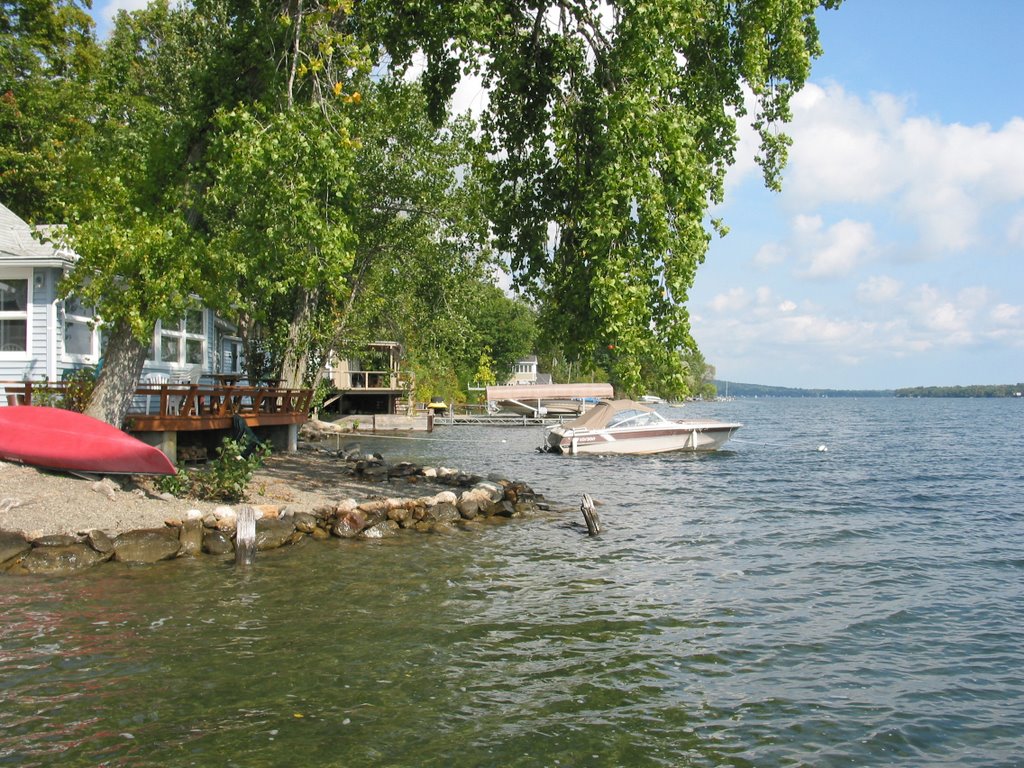
After spending a delightful weekend on Keuka Lake in the Finger Lakes region of Upstate NY, I'm trying to get caught up!

I'm in the final phases of polishing The Green Marble: A Sam Moore paranormal mystery to send to Lida Quillen at Twilight Times Books. I added a few new chapters to the end and am currenlty purging forbidden words. LOL!

Also, I just submitted Mazurka through my agent, Joan West, to Archebooks Publishing. Has anyone experience with them? I've heard good things about them and enjoyed the interview with owner Robert E. Gelinas in the Voice in the Dark ezine last month. They seem like a top notch small press.

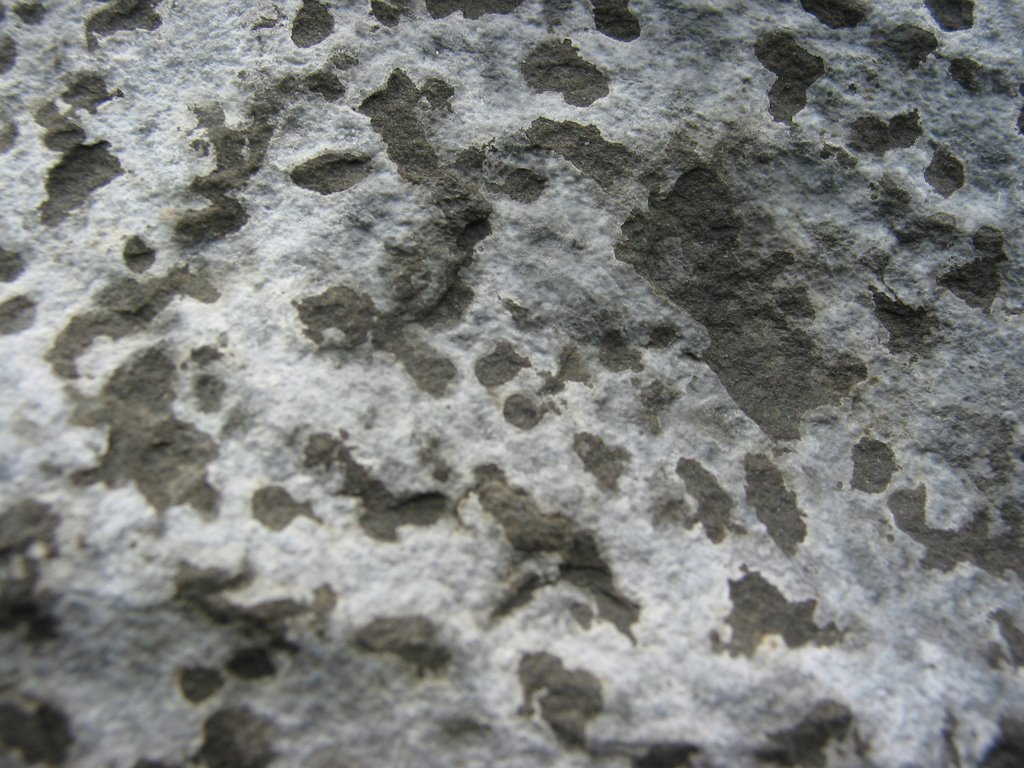
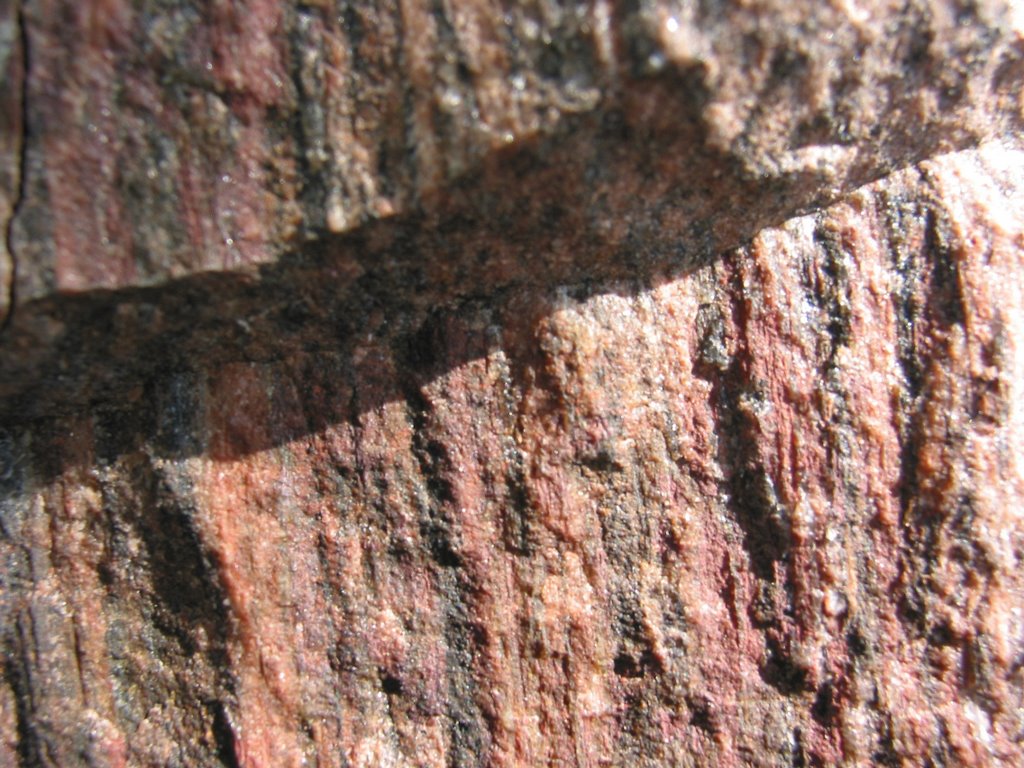
I went crazy this weekend with my newly discovered macro mode on my camera, (I know, I should have read the manual when I bought the camera a few years ago, but I'm a GUY!). Thought you might like to see a few of my favorite shots.

Aaron


\

Sunday, September 10, 2006


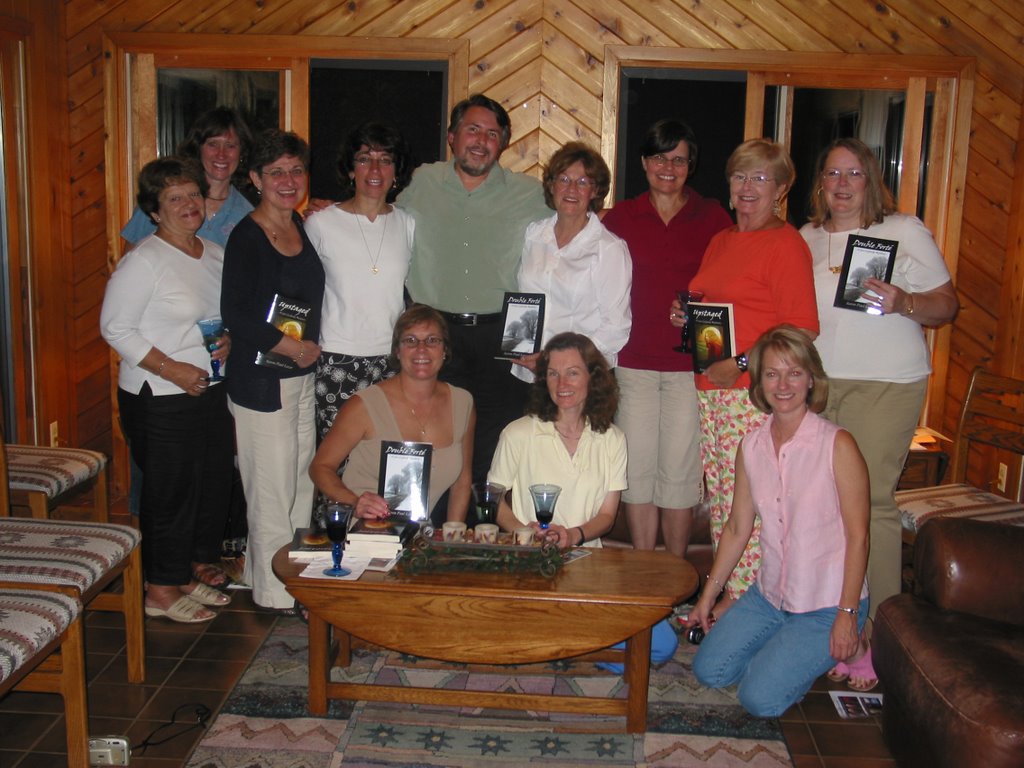
The Oak Ridge Drive Book Club, Sept. 8, 2006

What a lovely evening we had! Great wine, lots of laughs, and connecting with readers. That's what it's all about!


Thursday, September 07, 2006


Who’s that Knocking?

by Aaron Paul Lazar


Living in an antique home has its problems, especially when you’re not a handyman. My father taught me all sorts of wonderful things when he was alive, including passion for the arts, gardening, nature, gourmet cooking, and a good mystery. He didn’t know much about mechanical, plumbing, electric, or woodworking skills. Though I’ve tried to learn over the years with self-help books and advice from friends, I remain singularly unhandy, perpetually bowing with an unholy need to the whims of the local plumber and electrician.

Take, for example, the twenty-six windows that are crumbling as we speak. The six by nine inch panes are coming loose from their wooden mullions with alarming frequency. Or the floorboards in the bedroom, a lovely old yellow pine, that poke up like teepees when it’s hot and muggy. Yeah, they need to be treated with poly something-or-other, but for now, the moisture makes them swell. Consider the two wells that sometimes work in concert – except for the hundred times a year I have to run down to the cobwebbed cellar and reset the breakers or tap on the pump to make it work. The disadvantages are many.

But there are also great benefits, such as the three working fireplaces. Or the soil that surrounds the property, rich and black, untouched by bulldozers. It’s not like the hard packed fill they put in the new housing tracts. I don’t need to “amend” this soil. I just need to keep up with the produce and flowers.

Most intriguing of all, however, is the rich history.

Our house was built in 1811 by Dr. David Hunt.

Okay, so compared to the homes in Europe, it’s just an infant. But in terms of our country and its young age, it’s amazing. Think about it. This house was built and lived in more than fifty years before the civil war!

Imagine the births, deaths, dramas, romances, and heartaches that occurred within these rooms. Did the inhabitants suffer from small pox? Starvation? Were they affluent? How many horses or cows did they own? And… how many ghosts linger in these plaster and lathe walls?

Let’s examine the past 100 years. According to an elderly neighbor, over seven people have died on Hunts Corners. Traffic accidents. Drivers not stopping for the all-way stop signs, or sliding on ice, or drunk drivers plowing right into the telephone pole. Sad to think about. Makes you wonder about their spirits. Did they ascend to Heaven? Or do a few guilty souls remain in the area, confused and wandering, seeking the path to redemption?


Recently, I began to ponder another death disclosed to me by a young neighbor friend. We began to correspond after he read a few of my books. He’s a bright and entertaining young fellow who happens to be a voracious reader. We clicked. And we chat back and forth about books and life and sometimes… about the history of our area.

It seems Hunts Corners has a mystery all its own, stemming from the early 1900s. As the story goes, my young neighbor’s great grandmother noticed something odd one day. (I’ll invent names to “protect the innocent!”) While going about her daily duties, Mabel realized she hadn’t seen the young girl who lived next door in a long time. Anna no longer attended school, and rarely made an appearance outside the home. When she did, Mabel noticed a thickening in her middle, well-wrapped by heavy garments. She suspected the girl was with child. In that era, a pregnancy out of wedlock was unthinkable. Shameful. A sin. The family would endure public humiliation if news got out. So Anna was sequestered for nine long months as Mabel watched the child grow in her belly.

When the time came for the baby to be born, there was no activity in the house. No child was seen. No doctor arrived. All was quiet.

Speculation grew. Was the child stillborn? Or worse, was she murdered by a family cloaked in shame? Rumors were that the little baby was buried behind Anna’s house.
Since then, there have been reports of children pointing behind the house, exclaiming about the “little girl in the weeds.” The adults couldn’t see her.

But I think I might have, last winter.

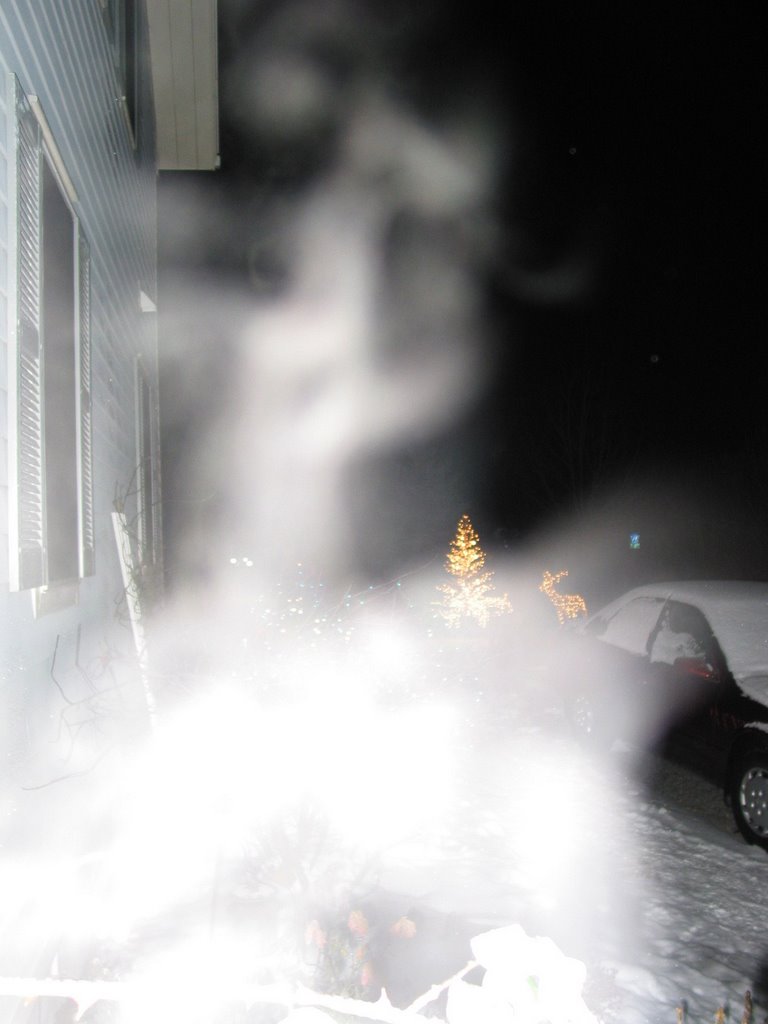
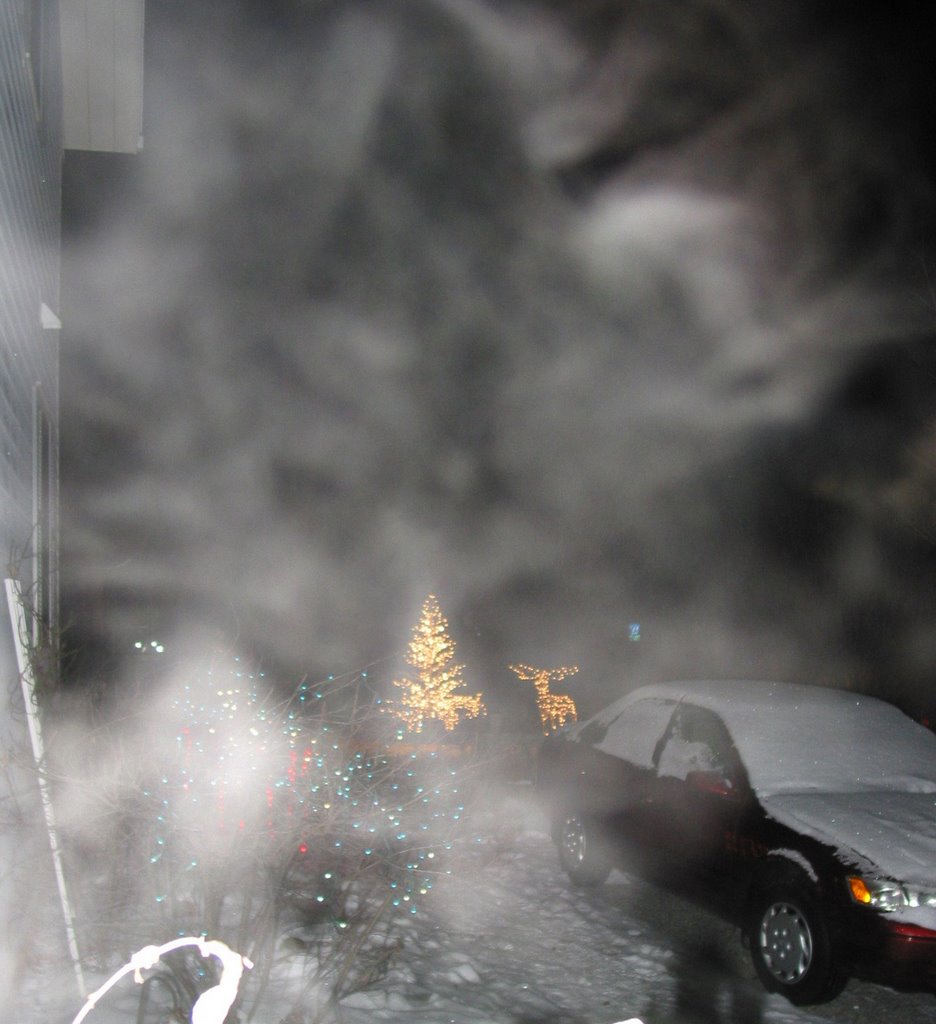
I rose early to photograph our Christmas lights. They were unusually festive last year, better than all past years. We’d added a few lighted deer for fun, and I was bound and determined to capture the beauty in the blackest of night. It was a clear, chill morning. Five A.M. Not a breeze stirred. Most households were fast asleep. Few cars passed by.

I brought my trusty Canon Powershot outdoors and shot dozens of photos. Later, when I viewed them on my PC, I saw the ghost. There she was – looking straight at me with wide open eyes. Filmy, transparent, but with a clear face and body. Only two shots revealed her, although I took dozens that morning.


The photos are untouched, straight from the camera card. And yes, I know there’s probably a scientific explanation. Maybe the light from the flash illuminated ice crystals in the air, causing a momentary illusion. But I’d like to ignore that for now and just consider it a visit from my friendly little ghost.

Last night I woke to a tapping sound. Usually it’s Max, on his chair, scratching an itch and thumping up against the armrest. I rose to check, but he lay still, mouth open, breathing evenly.

Could it be my grandson knocking on the door? I looked. No one was there. All was quiet, no little boys or cats were hoping to gain entrance.

I went back to bed. The tapping resumed. Looking out the window, I noticed headlights flashing by, briefly illuminating the darkness. Was that a flash of white? A face? Or simply the reflection on wet streets?

The tapping resumed. Outside my window. On the second floor.

Could it be?

I buried my head beneath the covers and said my prayers.

Friday, September 01, 2006


Savor the Moment: inspiration for writers

by Aaron Paul Lazar
August 31, 2006


It’s the last day of August. Autumn has already stretched tentative tendrils toward us, cooling the evenings and drenching the morning with heavy dew. Today, as I rounded the top of a hill overlooking the valley, my breath caught in my throat. Before me lay the snaking path of the Genesee River, previously hidden from casual view behind fields and woods. Nebulous clouds of fog hovered above, revealing the river route that quietly meanders out of sight most of the year.

My soul exploded with a sensation of splendor best described by the Japanese philosophy, wabi sabi*. This was a wabi sabi moment – a fraction of time linking nature and man, steeped in intense sensual beauty…so full of wonder it transports you to a moment of spiritual enlightenment.

In addition to the vapor-bound river, the countryside was punctuated with farmers’ ponds, exposed via banks of fog steaming overhead. Normally hidden by tall fields of grass or corn, the wisps of moisture called attention to the quiet shallows, home to frogs and watering holes for livestock.

Stunned by the beauty, invigorated beyond belief, I continued on the drive that I’d taken thousands of times before. Heading north on River Road, whispers of “Thank you, God,” floated in my brain. Still and amorphous, the words vibrated in syncopation with stirring grasses.

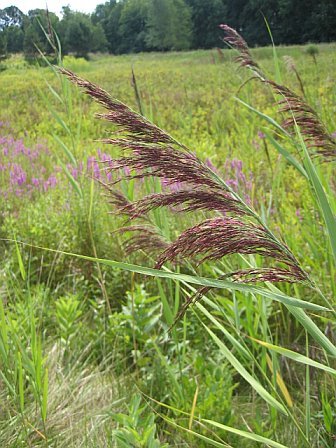
Once again, nature presented a feast so lovely I choked with emotion. There, to the east, clusters of wheat waved in the sunlight with heavy heads bowed under the weight of soaking dew, their curvatures swan-like as they moved in glistening silence.

The ephemeral nature of this phenomenon is part of the allure. That precise moment of intense immersion, that amazing connection with nature, will never repeat. The suns rays may not hit the grass with exactly the same angle or intensity. The grass will change tomorrow, perhaps drier, taller, or shorn. This transient moment of staggering beauty must be absorbed and cherished.

What path do writers take to experience this? How do they open the channels in the brain that might have been content to listen to Haydn’s 19th Symphony in C Major, but blind to nature’s offerings? (this was playing on the radio when I delighted in these visions today.)

First of all, one must be a “visualist.” That isn’t a real word, but it describes what I mean. A person who is stunned by physical natural beauty (certainly not at the exclusion of aural, tactile, or emotional stimulate) possesses visual aqueducts to the world through his or her eyes. Infinitesimal flashes of stunning images move him beyond belief. These impressions are captured in his mind’s eye, never to be lost, forever to be savored. And often, when this type of writer is creating, they see the “movie in their mind,” pressing from within, allowing readers to feel intimate and involved in a scene.

What type of a reader are you? Do you soak up scenes written by others? Imagine them for days on end? Find choice gems of passages that affect you for life? Do you want your readers to feel this way about your own prose?

It is this deeply felt appreciation for nature, for life, for wonder, that promotes a good writer to potential majesty. Perhaps not to best-seller status – that illusory fate is in the hands of a publishing industry often not tuned into art, but focused solely on profit. Try to ignore that aspect when you are creating your next masterpiece. In time, if the stars are aligned and you achieve this pinnacle of greatness, it may happen.

Open your eyes. Reel it in. Absorb the beauty around you, whether it is the flash of love in an old woman’s eye, or the fragile petal of a tiny orange cinquefoil. Allow yourself to be in that moment, record it in your soul, and play it back for your readers for the ultimate connection.

You can do it. Just try. And send me what you’ve written. I’d love to see it!


* Wabi Sabi for Writers, by Richard Powell, Adams Media.

Thursday, August 31, 2006


On yesterday's lunch walk, we found this poor Monarch butterfly. We said a prayer for it's fragile soul after exclaiming over its beauty. Note the symmetry of the rectangular patches and the spots on the body itself. According to my friend John C, the double layer of white dots along the edge differentiate it from the Viceroy butterfly, which looks similar but has only one row of white spots. He also explained that the Monarch's feed on milkweed and taste bitter to the birds, whereas the Viceroy's feast on sweeter meals, providing a more tempting treat to their aviary adversaries!
Thanks to Linda Slade for permission to use the photos.

Monday, August 28, 2006


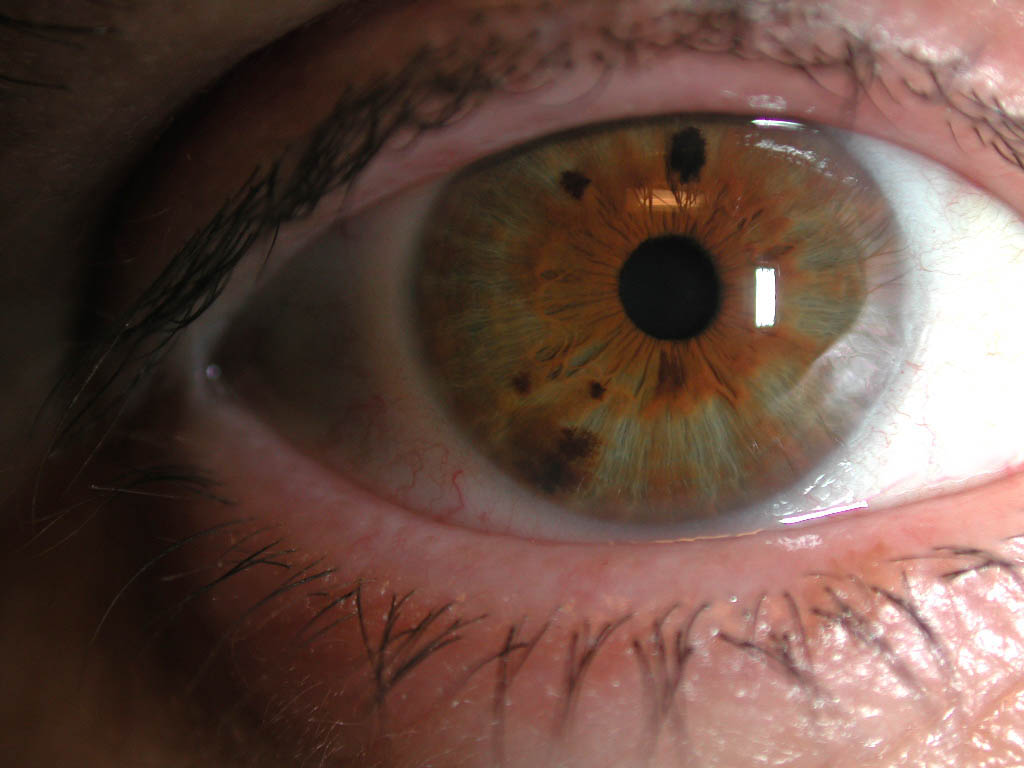
The Author's Eye, Original Photo

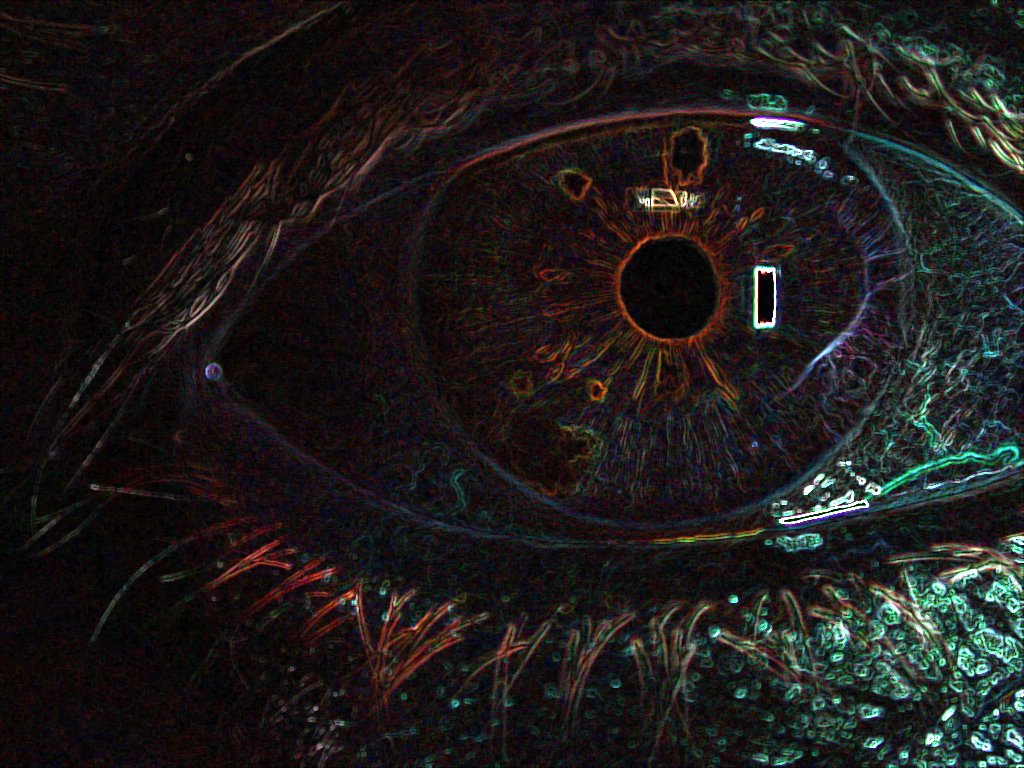
Just for grins, here's the original digital photo that I used to create the photoshopped version, below.

Thursday, August 24, 2006


The Author's Eye


More Advice for Writers – Forbidden Words

by Aaron Paul Lazar


I’ve collected some great writing advice over the past years. Some of it has worked, and some hasn’t. Recently, however, the list of “forbidden” words has grown through advice from fellow writers, agents, editors, and publishers.

It can be paralyzing.

Every time I bump against “that” or “had” in my prose, my heart beats wildly and I worry. “Does this belong here? Does it make my work sound amateurish?”

It’s almost impossible to avoid the words on the list. You can’t completely eliminate them. It’s especially true with dialogue. You want your characters to sound as natural as possible.

Let’s examine the first word on the list: down.

Now, in most cases it’s far superior to write, “Horatio sat at the kitchen table and stared at the congealed eggs on his plate,” rather than “Horatio sat down at the kitchen table and stared down at the eggs on his plate.” Right? And this rule of thumb is excellent, almost universally applicable. It also works for the word, “up.” In America, we use “up,” all the time in natural conversation. “Bubba ate up all of Cat’s french fries.” “Nancy stared up at the ceiling, searching for the right word.” “Sonja messed up Veronica’s hair and then jumped overboard.” And so on. Okay, these are crazy examples, but you get the point. You could certainly eliminate some of those “ups,” right? But be careful not to eliminate it in your characters’ dialogue. You don’t want them to sound stilted. It’s perfectly okay to use common phrases such as, “Margaret, get down here! Your toast is up.”

One of the first pieces of advice given to me (aside from “Cut, cut, cut!”) was to avoid the use of gerunds and “ing” verbs. “It’s much stronger,” I was told, “to use the simple past tense, or ‘ed’ verbs.” So, like a good doobie, I went back through my first four books and scoured them for “ing”s. I was merciless. Brutal. Barely an “ing” survived.

A few years later, I realized I went too far. The words sounded robotic, too stilted. I needed some of those “ing” verbs to vary the rhythm of the sentences, to make them sound more natural. So, with diligence, I returned to my growing list of novels and revamped them. Now, keep in mind it’s always better to write, “Mabel watched the plane land,” than “Mabel was watching the plane land.”

All right. What about tenses? We all learned the proper way to conjugate verbs and use tenses, such as the case of the past perfect. When something happens in the past, such as a flashback, it’s taking place before the current action, which is already in the past tense. Therefore, the flashback needs to be cast into the past perfect, using the word “had.”

Right?

Not always. My crit buddy SW Vaughn taught me this one. (many of the following examples are courtesy of her patient teaching.)
It is grammatically correct to write the following paragraph when referring to a recapped an event in your story:

A pang of sorrow hit me as I thought back to the dreadful time two years ago when I had lost him. He had fought the cancer as bravely as he had stood up to the Germans on D Day in Normandy. Just before we had learned the dreaded disease had returned to claim him, we had shared one final, peaceful day of fishing on Hemlock Lake. (granted, I would have made most of these contractions to make it sound more natural.)


However, it reads smoother like this:


A pang of sorrow hit me as I thought back to the dreadful time two years ago when I lost him. He fought the cancer as bravely as he stood up to the Germans on D Day in Normandy. Just before we learned the dreaded disease had returned to claim him, we shared one final, peaceful day of fishing on Hemlock Lake.


I’ll admit, now I would be tempted to remove the “up” and would probably rewrite this passage with a vengeance. But can you see how just one or two well-placed “hads” retain the meaning of the memory? Of course, there’s always the opposite viewpoint. My current editor added a number of “hads” in my manuscript for Tremolo because I went too far!

Next came the great adverb purge. I don’t remember which book it was that got me going on this kick. Probably Stephen King’s, On Writing. (That was a great read!) Regardless of the source, I was inspired to eradicate adverbs. I became an adverb Nazi. No “ly’s” would sully my prose! I’d search for the choicest verbs. They’d glow from my pages because of their utter perfection. After that phase, I backed off a little, allowing a few adverbs here and there. Sometimes, it just sounds better with them, doesn’t it?

It’s all a matter of balance.

Let’s talk about the word, “then.” I have to admit, it’s prevalent in my work. My characters are always doing something, “then” going onto the next action. I liked it instead of “and.” It seemed to fit better and sounded more natural to me.

This year, while participating in an online writers’ critique forum, I was surprised to learn when these editors spotted the word “then,” or too many instances of “as” or even a “suddenly,” they immediately pronounced it amateurish and went to the next piece in the slush pile.

How did I react? Did I sit back and judiciously cull words from my books? Or did I throw my hands in the air (notice I didn’t say “up in the air!”) and give up? (okay, so I used up here.)

Still aching to learn the “rules” that would graduate me to “professional writer status,” I dutifully reduced the number of the “then’s” and “suddenly’s” from my current work in progress. They read better. I think…

Sometimes I end up using different “forbidden” words when I do this. It’s so frustrating, and it can be almost crippling if you let it. Although I’ll never stop trying to improve my prose, I’ve decided that I need to just “let it out” in the first draft, and then (LOL), review it in future edits to purge the evil words.

Here’s a handy list of words to keep in mind when editing:

1) “Down” and “Up” may be eliminated most of the time. “Oscar set his fork down on his plate and nodded in the direction of Conaroga,” could better be worded. “Oscar set his fork on his plate and nodded in the direction of Conaroga.” Or: “The heat wave sizzled throughout the week, drying up the cornfields to the point of near desiccation,” is better without the word, “up.” The heat wave sizzled throughout the week, drying the cornfields to the point of near desiccation.

2) Examine verbs ending in “ing,” especially in conjunction with “was” and “were.” Sprinkle them into your writing to vary the rhythm, but avoid cases such as “I was watching the birds while drumming my fingers on the table.” You might consider, “Watching the birds, I drummed my fingers on the table,” or, “I watched the birds, drumming my fingers on the table,” or, “I watched the birds and drummed my fingers on the table.”

3) Had – use sparingly to clarify the time sequence. Don’t pepper your back-stories with “hads,” and use contractions to make it sound more natural. “All four teeth had finally broken through and the poor baby was finally out of pain.” Try something like this, instead: “All four teeth finally broke through and the poor baby was finally out of pain.”

4) Remove unnecessary adverbs. Change sentences such as “Judy looked sullenly at me,” to something like, “Judy glowered at me.”

5) Eliminate the word “the” when it precedes a noun that could stand alone. Example: “The images from the newscast whipped across my brain,” might be replaced by “Images from the newscast whipped across my brain.”

6) Minimize contiguous prepositions, and words like “over” and “back.” “Mary threw the ball back over to Tom.” Instead, “Mary threw the ball to Tom,” or “Mary returned the ball with a vengeance.” Avoid sentences like “The boy ran over to the counter,” or “I trotted back along the trail.”

7) Steer clear of “that,” except in dialogue. We use “that” as a connecting word far too often, and we don’t need it! I’ve already removed a number of “that’s from this article. It really does smooth out the prose. Try it! “The President discovered that his agent was a spy.” Instead, “The President discovered his agent was a spy.”

8) “Suddenly” was just added to my list. I used it interchangeably with “Without warning,” “Instantly,” or “In seconds.” I am still confused about the legitimacy of this one. A good friend whose manuscript is currently being scoured by her editor said she’d removed all instances of “suddenly,” only to have her editor put them back in!

9) Another word we use a lot in conversation is “very.” Try not to use it in prose. Find a better descriptor. “The giant was very tall,” is better as, “The giant towered over us.”

10) Because can be used sparingly, but not in the following way: “She craved the hamburger because she was hungry.” This example might work: “Because of his history, he avoided the cops.”

11) Minimize your use of “then,” and “as.” “He must have crawled into the trash barrel to look for food or water and then became trapped in its slippery interior.” Instead, try: “He must have crawled into the trash barrel to look for food or water and become trapped in its slippery interior.” “His eyes shone as he sat on the front seat,” might be replaced by “He sat on the front seat, eyes shining.”

12) Avoid phrases such as, “I saw,” “I felt,” “I heard,” or even worse, “I could hear,” “I could feel,” or “I could hear.” Instead, try to show precisely what is happening through the sounds or visions. For example: “I could see the hawks flying overhead, swooping in lazy circles as they sought fresh blood.” Try replacing it with something more direct, like this: “The hawks swooped in lazy circles overhead, seeking fresh blood.”13) I don’t care for the word, “which.” A friend, Jude, just reminded me to add this to the list. Here’s his example of an awkward sounding sentence: “I put ice on her ankle, which had already started to swell.” Perhaps a better solution might be, “I applied ice to her swollen ankle.”

13) Shun clichés like the plague. Whoops. ;o) Seriously, though, clichés are just that – timeworn and boring. Create something scintillating!

14) Try not to repeat words within a chapter. For example, if you’re describing an explosion, be sure to vary the words that refer to it, such as “the blast,” “the roar,” “the eruption,” or “the detonation.” Remember, http://www.thesaurus.com/ is your friend!

If you’re totally confused by now, join the club. This whole thing can be daunting. But don’t be concerned if any of the “forbidden” words pepper your prose. Take heart. As you’ll see from similar studies, many of the classics and current bestsellers are fraught with these words. Does it matter? Heck, no. We still enjoy the books as readers will for years to come.

Consider what the wabi sabi philosophy teaches us, “Nothing is perfect. Nothing lasts. And nothing is finished.” (Richard R. Powell, Wabi Sabi for Writers, 2006, Adams Media, ISBN 1-59337-596-4)

My advice? Don’t go crazy each time you learn a new forbidden word or phrase. Simply do the best you can, write from your heart, and try to tighten your prose without squelching your own style.


***


Aaron Paul Lazar is an engineer by day, but his passion lies in writing. The LeGarde Mystery series involves more than breathless suspense -- the books are filled with musical, lyrical scenes that touch on life, loss, nature, family, animals, food, gardens, and music. Eight books have been completed. A second series has also been born, featuring paranormal mysteries with Sam and Rachel Moore, a retired country doctor and his wife who suffers from multiple sclerosis. Lazar’s latest book, Tremolo: cry of the loon, is available through Twilight Times Books.

Mr. Lazar also writes monthly columns for the Futures Mystery Anthology Magazine, Voice in the Dark newsletter, and The Back Room ezine. He lives in Upstate NY with his extended family. Visit his websites at http://www.legardemysteries.com/; http://www.mooremysteries.com/, and his blog at http://www.aaronlazar.blogspot.com/.


Wednesday, August 23, 2006


Another lovely day for a walk in
Upstate NY...


Monday, August 21, 2006


What’s in Your Back Yard?
by Aaron Paul Lazar


I’ve had some interesting “lunch walk” partners over the years. When I started engineering at Kodak twenty-five years ago, I found friends who shared my lust for the outdoors – who longed for fresh breezes and blue sky – and who longed to break out of the gray enclave and burst into sunlight in the middle of the workday. We walked regularly, usually for three miles around the perimeter of the dozen buildings that sprawled in a massive complex.

There was Gangaram, my Gujarati friend, who stomped over the grass with certainty, expostulating about family and tradition, and sharing stories of his exotic and colorful childhood in India. He died of a heart attack, fourteen years ago. I still think of him fondly and often recall our deep discussions of fatherhood.

Next came Dave, a true kindred spirit, whose life seemed to parallel mine in the realms of children and reading. Dave’s four daughters were ten years ahead of my three girls, and I learned many lessons in the virtues of patience and quiet endurance during our walks together. He introduced me to Clive Cussler’s Dirk Pitt novels. Dave is retired and now boasts thirteen (or is it fourteen?) grandchildren.

I became attached to my walking buddies over the years. Friendships blossomed and our lives were enriched.

Then, there were the years when I walked alone.

I’ll never forget those walks in the fall of 1997, just after I lost my father. I strode through crunchy leaves and listened to the leaves whispering my name, longing for signs that Dad was okay… that I was okay. Well, I wasn’t. But in time, I forged on and learned to cope with the most powerful loss of my life.

I wrote God-awful poetry after those walks, redolent with lush imagery and emotion that spilled from the pages. Although it wasn’t suitable to publish, it did get my career as a writer kick-started. Soon afterwards, the LeGarde Mystery series was born and it’s still going strong, nine years later.

This year, my lunch walking pal left the company for greener pastures. She landed a sweet job in another state, with a collection of low-cost benefits that are otherworldly-amazing. She’s started her own solo lunch walks around her new complex. Soon, she’ll align with new friends who have the same need to escape to nature for a short while. I accept that this cycle repeats and wish her great success in her new adventures.

In twenty-five years of lunch walks, however, I never knew what lay in my own back yard.

My new walking buddies are adventurous. I call them the Treasure Hunter and the Meanderer. They don’t settle for the same old paths over which I’ve trod for years. They cross the street, duck down barely visible dirt paths, and venture into lands outside the complex. Through these brave pioneering marches into foreign territories, we’ve discovered a lunch walkers’ nirvana.

There, just across the street and not fifty feet from our usual perimeter walk, lay hidden trails that lead to glorious glens, sparkling creeks, and grassy trails lined with woods. For twenty-five years - nearly a thousand walks - I’ve passed this seemingly scrubby area and not given it another thought.

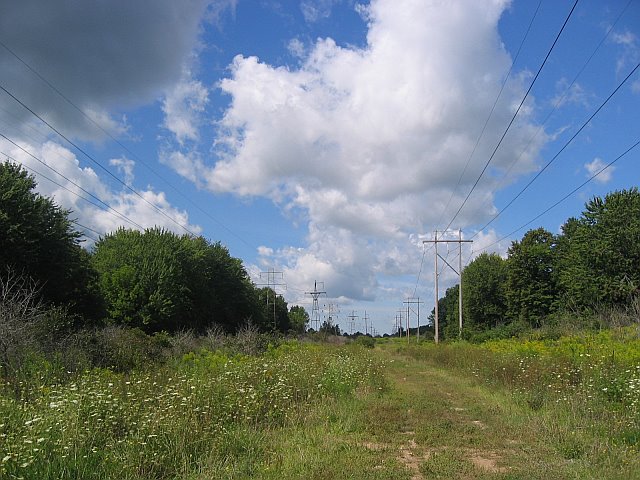
Until last week, when on one of the far-flung adventures, the Meanderer led us to some newly discovered wood trails. I remember the day well. That evening, I was scheduled for a book club event at 6:30 in a nearby library. We passed through cool, glorious woods and broke into the sunlight to follow a dirt track flanked by robotic-looking power lines. Delighted to find such previously hidden treasures, we chatted and laughed our way through patches of Queen Anne’s Lace, purple loosestrife, buttercups, black-eyed Susans, and flowering milkweed. Heading in the direction we hoped was “home,” we stumbled upon a wide creek. The Treasure Hunter pointed out a blue heron taking flight.

In the distance, we heard the sounds of humanity. A metal door clanged shut in a company loading dock. Cars whooshed past on the road we’d originally braved and crossed. We were heading in the right direction.

After tromping through the “wild,” sweaty and tired and ready for the sandwiches that beckoned in the bags on our desks, we had to find a way across the creek. We began to inspect the shore, walking farther down the muddy stream. Although we hoped to find a crossing or a narrow neck of water, we were sunk. There was no way to cross.

Unless…

Our pioneering spirits kicked into overdrive as we searched the nearby woods for dead limbs or tree trunks light enough to carry, but heavy enough to hold our weight. The Meanderer found a balancing pole. I threw the gathered logs across the creek, splattering my blue Dockers with fresh mud. Laughing and feeling deliriously adventurous, I ventured out over the logs.

I set one foot on the slippery log. It sunk into the mud, moistening my walking sneakers. Using the balancing pole, I cat-walked across the creek – until I came to the end of the man made “bridge,” where the grass-filled water looked solid from the opposite bank. Stuck, I forged ahead, sinking up to my ankles in mud.

The tears rolled down our cheeks as we belly laughed, choking and guffawing until we thought we’d lose control. There are no restrooms in newly discovered nirvana. Doubled over and nearly hysterical, we finally stopped to assess the situation.

More logs seemed to solve the problem. I caught and positioned them so my friends could safely avoid the muck.

The Meanderer started across, using the balancing pole carefully. One step. Two.

She’s gonna make it!

Three. Four.

Five, six, seven.

Oops.

On the last step, she lost her balance and stepped into the gooey mess.

Another round of insane laughter. This time, the Treasure Hunter took a turn. Confident she could navigate this last hurdle, she took one step, lost her balance, and another sneaker was submerged in guck.

Laughing uncontrollably, we sloshed back to work, leaving muddy trails of pond scum in our wake. I tried to clean off my pants, but was only partially successful. The sneakers went into a plastic bag, and I stopped on the way to the book club appearance to buy a fresh pair of socks.
Now, we head for the trails at every opportunity. Yesterday, we brought a lunch and read aloud in a cool glen. And still, I remain astounded that this amazing oasis lay undiscovered, in our proverbial back yard, for the past twenty-five years.

What lies in your back yard? Are there trails, unexplored, that call to you? What waits on your bookshelf, or in your attic? Are there books, unread, that whisper your name, that could forever change the way you see life? And for you writers, are there stories untold, visions still clouded, that may become your next work of art?

Search beyond your comfort zone. Cross that street, delve into those woods. Open that book. Discover what’s in your own back yard. Today.

Wednesday, August 16, 2006

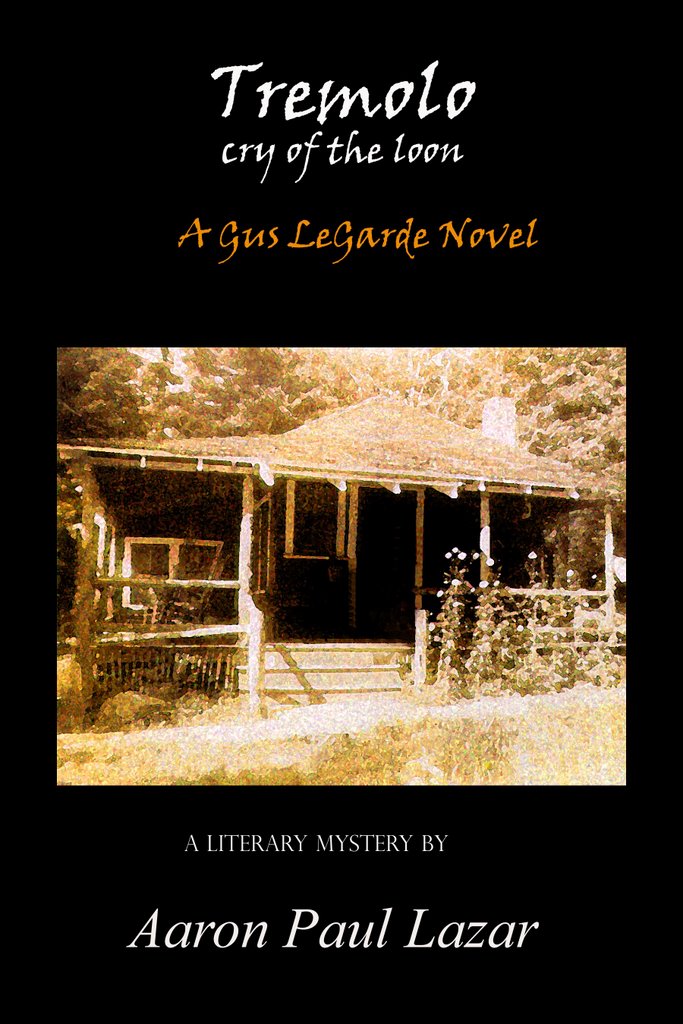
New Release! Click here to buy the ebook in downloadable pdf format until the print version is released in 2007.


Tremolo: cry of the loon, is a coming-of-age mystery, a stirring and nostalgic trip back to the summer of 1964 when the nation mourned the assassination of JFK and American life was forever changed by the arrival of the Beatles.

Eleven-year-old Gus LeGarde is spending another glorious summer at his grandparents’ lakeside camp, along with his best friends, Elsbeth and Siegfried Marggrander. When their boat capsizes, Gus and the twins witness a drunk chasing a girl through the foggy Maine woods. She’s scared. She’s hurt. And she disappears.

On horseback and on foot, Gus, Elsbeth, and Siegfried search for Sharon Adamski, worried her brutal father will find her before they do.

During the hunt, Gus is faced with a number of personal dilemmas. He must keep secret his new friendship with “Mrs. Jones,” a woman in mourning who resides incognito. Gus also glimpses a slice of the twins’ life through their mother, who lost her family in a Nazi concentration camp. In a cruel coincidence, Gus faces the imminent loss of his own mother.

Reports of stolen religious artifacts reach the lakeside camp. New England churches have been ransacked, and missing is the church bell cast by Paul Revere, stolen from St. Stephen’s church in Boston’s North End. When Gus and his friends stumble on a scepter that may be part of the loot, they become targets. The villain turns on them, and all thoughts of a lazy summer whirl out of control.

Tuesday, August 15, 2006


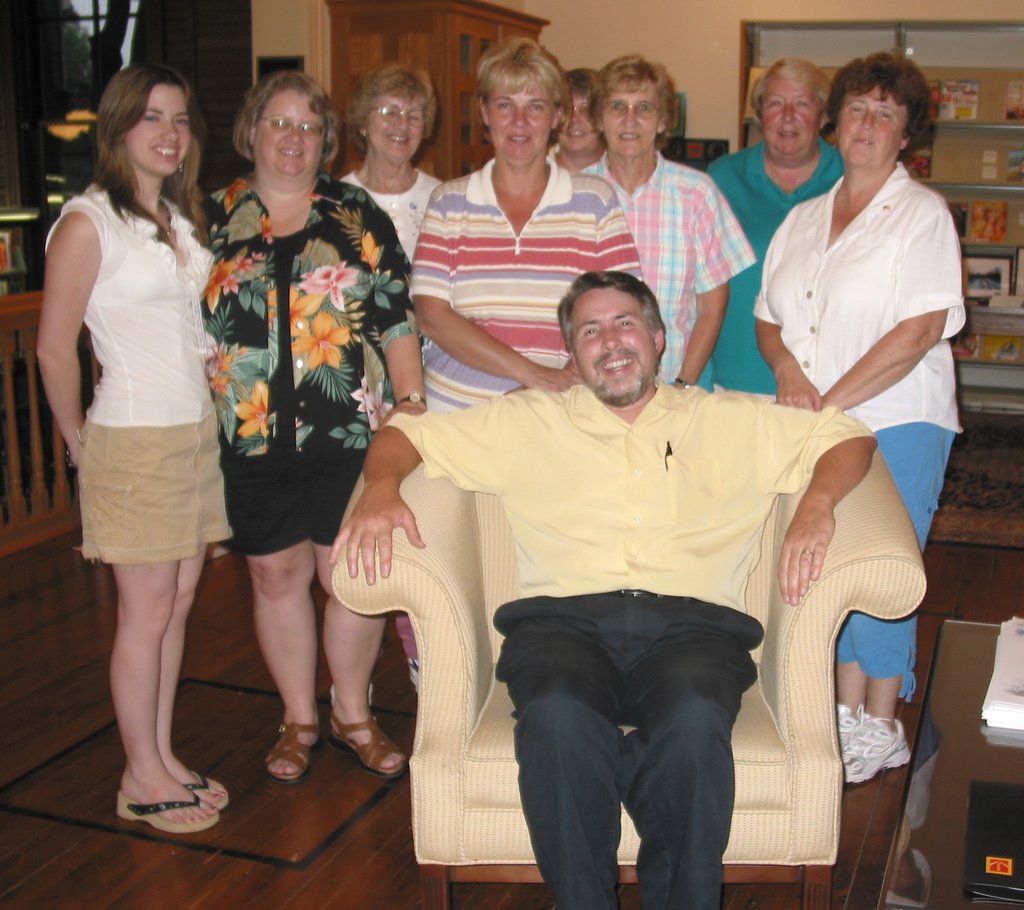
Women of Wheatland Book Club, August 14th, 2006. We enjoyed an enchanted evening filled with laughter and deep discussion.

Connecting with readers is what it's all about. Meeting with book clubs is a hidden aspect of writing that offers unanticipated joy. I simply love it.

To see future events click here.